

 Send Inquiry


 Get a Quote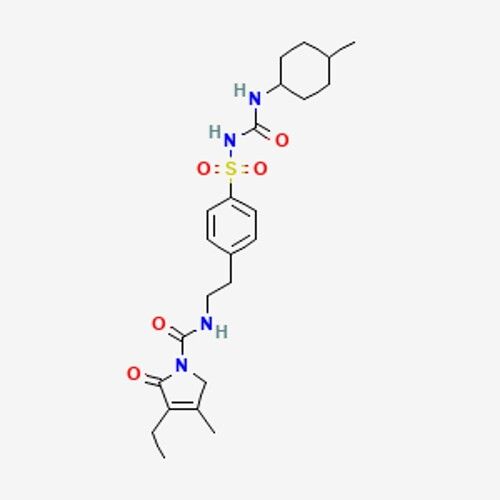
Glimepiride API
Product Details:
- Product Type API (Active Pharmaceutical Ingredient)
- Form Powder
- Ingredients Glimepiride
- Recommended For Type 2 diabetes patients under medical supervision
- Treatments & Functions Oral blood glucose-lowering agent (antidiabetic)
- Age Group Adults
- Dosage As prescribed by physician
- Click to View more
X
Glimepiride API Price And Quantity
- 10 Kilograms
Glimepiride API Product Specifications
- Powder
- API (Active Pharmaceutical Ingredient)
- Oral blood glucose-lowering agent (antidiabetic)
- Adults
- Keep in a dry place and store at room temperature, away from direct sunlight and moisture.
- As prescribed by physician
- Take as directed by healthcare professional, usually once daily with breakfast or the first main meal
- Type 2 diabetes patients under medical supervision
- Glimepiride
Glimepiride API Trade Information
- Bhavnagar
- Cash in Advance (CID)
- 1000 Kilograms Per Month
- 1 Week
- All India
Product Description
Glimepiride is an oral medication used primarily to manage type 2 diabetes Heres a quick overview of what you need to know about it
What It Is
Name Glimepiride
Class Sulfonylurea
Form Usually taken as a tablet
How It Works
Glimepiride helps lower blood sugar levels by stimulating the pancreas to release more insulin It also improves the bodys sensitivity to insulin
Common Uses
Type 2 Diabetes Its used to control blood sugar levels in people who have type 2 diabetes especially when diet and exercise alone arent sufficient
Dosage
The dosage can vary based on individual needs and is usually started at a low dose to minimize side effects It can be adjusted as needed
Side Effects
- Some common side effects include
- Low blood sugar hypoglycemia
- Nausea
- Headache
- Dizziness
- Weight gain
More serious but less common side effects can include allergic reactions and liver problems
Precautions
- Allergies Inform your doctor if you have a known allergy to sulfonylureas or other medications
- Interactions Glimepiride can interact with other drugs so its important to discuss all medications youre taking with your healthcare provider
- Medical Conditions People with certain conditions such as liver or kidney disease may need dose adjustments
Monitoring
Regular monitoring of blood sugar levels is crucial to ensure the medication is working effectively and to adjust doses as needed
Lifestyle
- Along with medication a balanced diet and regular exercise are essential for managing diabetes effectively
- Always follow your healthcare providers instructions and discuss any concerns or side effects you experience
High Purity for Pharmaceutical Applications
Glimepiride API meets strict quality standards with an assay of at least 99.0%, ensuring efficacy and safety in pharmaceutical manufacturing. Its crystalline powder form and melting point between 208-209C make it highly reliable for consistent drug formulation.
Optimal Storage and Packaging
The API is packed in double LDPE bags within HDPE drums or customized containers, protecting it from moisture and contamination. To maintain stability and extend shelf life up to five years, it should be stored at room temperature in a dry location, shielded from direct sunlight.
Application in Diabetes Treatment
Glimepiride API is extensively utilized in the formulation of oral blood glucose-lowering agents for adults with type 2 diabetes. Its efficacy and favorable safety profile have made it a preferred ingredient among pharmaceutical exporters, manufacturers, and traders in India.
FAQ's of Glimepiride API:
Q: How should Glimepiride API be stored to maintain its quality?
A: Glimepiride API should be kept in a dry place at room temperature, away from direct sunlight and moisture, to preserve its potency and ensure a shelf life of 3-5 years.Q: What is the recommended usage of Glimepiride API in pharmaceutical synthesis?
A: Glimepiride API is used for the production of oral antidiabetic drugs, specifically for managing type 2 diabetes in adults. Final doses and formulations are determined by healthcare professionals.Q: When is Glimepiride API typically administered during drug formulation?
A: In clinical settings, medications containing Glimepiride should be taken once daily with breakfast or the first main meal, as directed by a physician, after formulation using the API.Q: Where can Glimepiride API be sourced?
A: Glimepiride API is available through exporters, importers, manufacturers, and traders in India, packaged securely for transport and storage.Q: What is the benefit of using Glimepiride API in antidiabetic drugs?
A: It provides effective oral blood glucose-lowering properties, helping adults with type 2 diabetes achieve better glycemic control under medical supervision.Q: What process is involved in packaging Glimepiride API?
A: The API is packed in double LDPE bags placed inside HDPE drums, or as specified by customers, to safeguard against contamination and moisture during shipment and storage.Q: How is Glimepiride API characterized for quality assurance?
A: Quality assurance is ensured by its specification of not less than 99.0% assay by HPLC, pharmaceutical grade classification, and controlled physical properties such as appearance and melting point.Tell us about your requirement

Price:
Quantity
Select Unit
- 50
- 100
- 200
- 250
- 500
- 1000+
Additional detail
Mobile number
Email

Other Products in 'API' category


Contact Details

- Plot No. 1408-1409, Near Little Hut Cross Road, G.I.D.C., Ankleshwar - 393002, Gujarat, India
- Phone : 08045802548
GST : 24AAFCA5539E1ZX

- Mr. Bhargav M Soni (Director)
- Mobile : 08045802548
- info@abhilashapharma.com

 Send Inquiry
 Send SMS
ABHILASHA PHARMA PVT. LTD.
All Rights Reserved.(Terms of Use)
Developed and Managed by Infocom Network Private Limited.
Developed and Managed by Infocom Network Private Limited.

